

When the roads turn against us it is during the most unpredictable times they reveal themselves, whether you’re having trouble managing the design and upkeep of a new website design or are a car enthusiast making sure that you know how to properly change a car tire will see you from roadside problem to traveling in no time. In this tutorial, you will find a detailed guide on how to change a tire with little fuss.
Essential Tools You Need
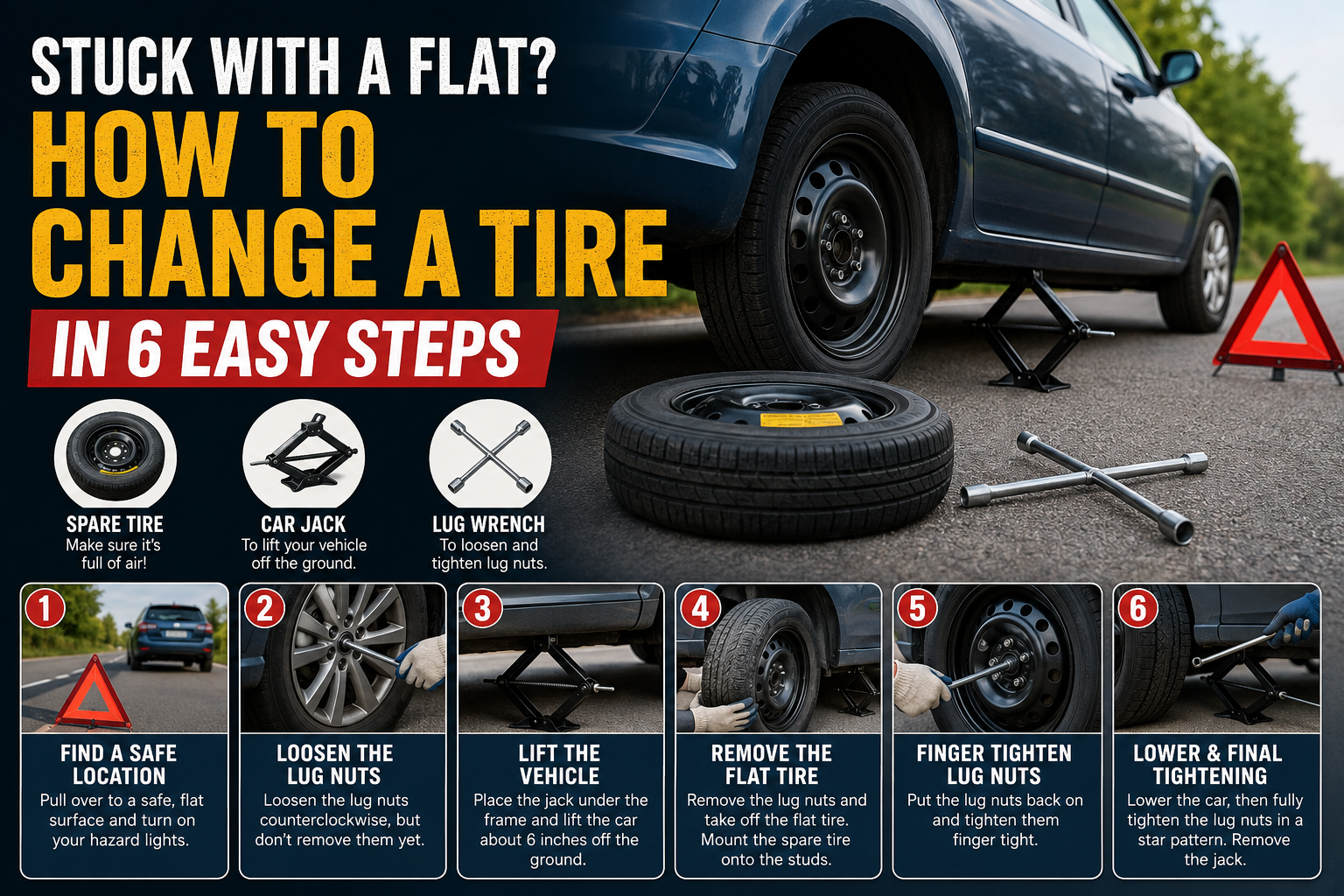
To get started, you’ll want to carry these 3 items with you in the trunk of the vehicle:
- Spare Tire: Be certain it’s full of air!
- A Car Jack: To lift your vehicle off the ground.
- Lug Wrench: to unfasten and fasten tire bolts.
Step 1: Find a Safe Location Right Away
Let’s be safe when it comes to flats. Should your tire go flat while in the middle of nowhere and you see signs of a losing tire you: Do not brake abruptly or at a loss for emotion. Take gradual pace to get off into a hard, flat, and straight level to keep from your tire changing out underneath the motor car at a tough moment or the jack tilting. Activate your flashers (double signs).
Step 2: Lug Nuts (Loosened, But Not Removed)
Remove wheel cover or hub cap, if used. Loosen the lug nuts on the flat by using your lug wrench, turning counterclockwise. Be sure to just break them free of the lock nuts, but don’t remove the lug nuts at all. Leave the wheel on the ground so it will not spin when attempting to break loose the stuck lock nut.
Step 3: Safely Lift the Vehicle
Slide the base of the jack underneath the frame. On new vehicles there is usually a specific notch underneath to place your jack, although you can locate your exact spot from your manual. Crank your jack slowly until your flat tire is off the ground approximately six inches high. At no time place yourself underneath the car.
Step 4: Ditch the Flat Tire
Okay take off these bolts that’re still here and put them in your pocket so you don’t lose one. Once out, slide that flat-tired-one off the bolts all the way towards the car body. Then mount your spare tire to the studs – your spare tire will sit flush against the wheelbase of your car.
Step 5: Finger Tightenlugnuts
Slip the lug nuts back onto the studs and tighten them down finger tight. Save the lug wrench for later.
Step 6: Lower the Car and Do the Final Tightening
Now slowly turn the jack to slowly drop the car until the spare touches the ground but still is not carrying the full weight. Using the lug wrench, fully tighten the nuts (again, tightening in the pattern of the stars rather than clockwise this time). Remove the jack and let the car fall to the ground.
Conclusion
Return the flat tire and your tools to your trunk. Note: All spare tires are designed to be used on a temporary basis and should never be driven faster than 50 miles per hour (80 kpm) and should not be driven for more than 50 miles at a time. Immediately get to a tire repair shop and have your real tire repaired or replaced.
