

Introduction
Curious why CHST has quickly become the hottest safety cert in construction? With all the attention shifting towards workplace safety, digital transformation, and stringent regulations, chst continues to rise in popularity for both employees and businesses. The CHST cert is a must-have not just for every construction employee but also for project supervisors, managers, and even civil engineers to assist them in creating a more secure environment. Continue to learn all there is to know about chst and how modern tech influences it to be even better, including future career paths and advantages.
What is chst?
Chst stands for Construction Health and Safety Technician. CHST is one type of construction certification that proves the person’s competency in the field of construction safety regulations, accident control, risk assessment, and hazard prevention. An individual with CHST certification assists in ensuring workers have safety practices, identifies hazardous areas, performs safety inspections, and maintains an accident-free and safe construction work environment for all the company’s construction project sites and workers.
Why is chst Becoming More Important
Projects keep growing each year. Construction jobs are becoming larger, more complicated, and carry greater safety responsibility.
As such, chst job numbers rise because:
- Growing construction projects worldwide
- Stricter workplace safety regulations
- Digital transformation in construction
- Increased focus on accident prevention
- Better risk management practices
- Higher employer expectations
As companies spend increasingly more on safety initiatives, certified safety professionals are always worth something.
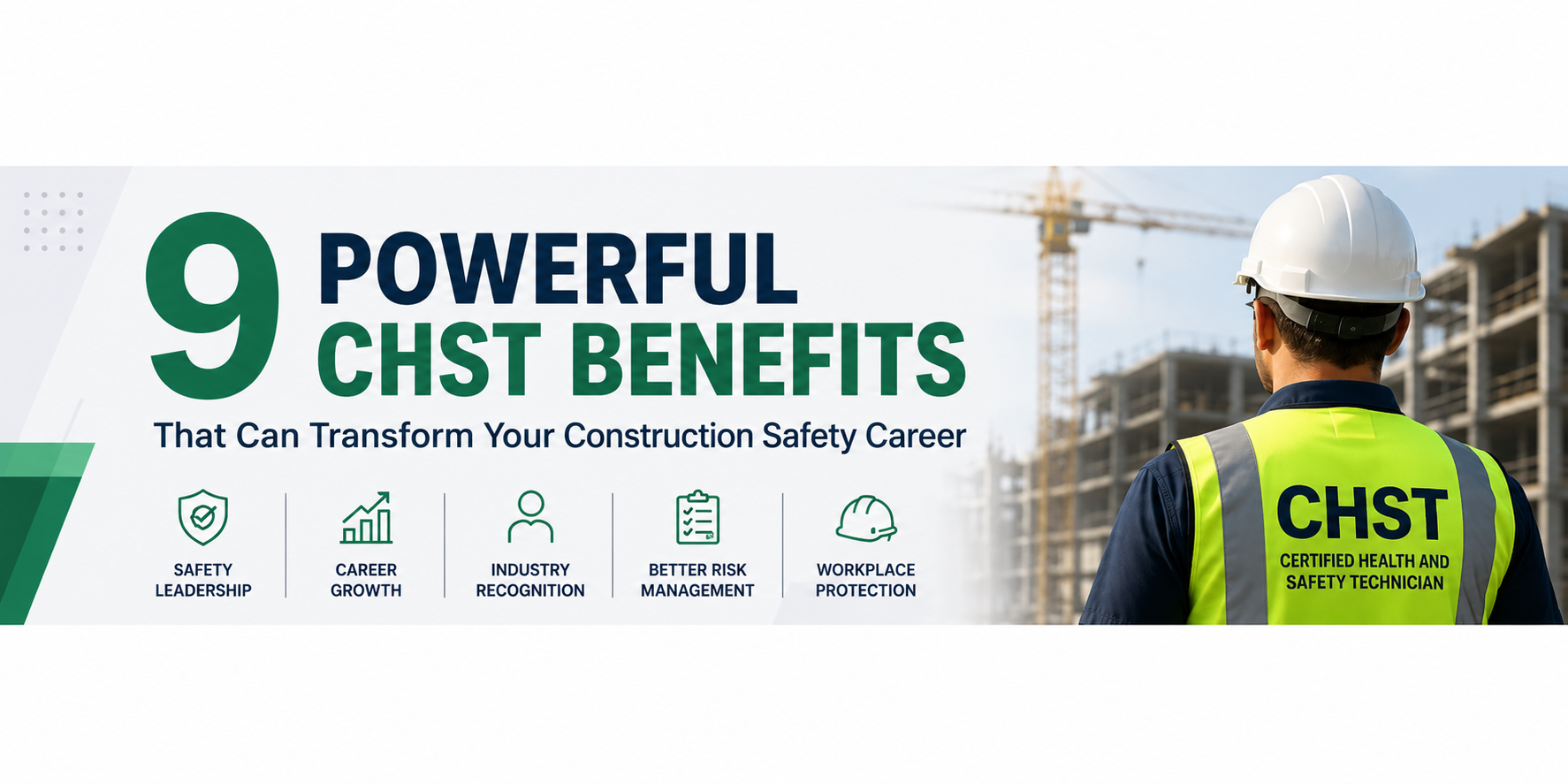
9 Powerful Benefits of chst
1. Better Career Opportunities
There are many employers that would favour people who have obtained accredited safety qualifications, such as a CHST qualification.
2. Higher Salary Potential
Positions for specially credentialed safety personnel frequently command more lucrative salaries and also the capacity to go into higher levels of leadership.
3. Improved Workplace Safety
Certified professional training can effectively minimize accidents by improving safety awareness and proactive measures.
4. Greater Professional Credibility
By keeping your chest up to date, you’re showing your commitment to a career of safety excellence and your determination to consistently learn and grow.
5. Better Risk Management
How do practitioners detect and prevent hazards? Training in detecting the risks before they become serious events.
6. Stronger Leadership Skills
The vast majority of chest holders are managing groups of people, supervising health safety meetings, and controlling health workplace activities.
7. Technology Integration
Safety in Modern Construction using digital tools, such as CHST, is now becoming indispensable as a work tool in.
8. Regulatory Compliance
Companies need professionals who know and understand contemporary safety regulations and standards.
9. Long-Term Career Growth
There will continue to be a big demand for experienced safety professionals as building continues worldwide.
How Technology Supports chst
Technology has drastically helped in the management of construction safety, and it is for this reason that most of the CST professionals work today.
Among them we have:
- Artificial Intelligence
- IoT safety sensors
- Drone inspections
- Mobile safety applications
- Cloud-based reporting systems
- Wearable smart devices
- Digital inspection checklists
- Predictive analytics
Reporting on such hazards can improve productivity around your workspace and,d in turn, speed up the process of identifying a new problem more quickly.
Industries That Need CHST Professionals
Chst is of considerable value beyond traditional construction firms.
Several Industries that Regularly Hire the Certified Include :
- Commercial Construction
- Residential Construction
- Infrastructure Projects
- Oil and Gas
- Manufacturing
- Renewable Energy
- Transportation Projects
- Industrial Facilities
- Data Center Construction
Opportunities for people involved in smart building are also growing with the ongoing integration of intelligent building technology.
Skills Developed Through chst
Working with colleagues and customers, people develop many of these workplace skills, such as:
- Hazard recognition
- Safety inspections
- Incident investigation
- Risk assessment
- Emergency response planning
- Communication
- Leadership
- Safety documentation
- Digital reporting
- Regulatory compliance
These skills come to both the employers and the workers.
Who Should Consider chst?
A look at chst is worthwhile if you are.
- Construction workers
- Safety officers
- Site supervisors
- Engineers
- Project managers
- Field inspectors
- Construction consultants
- Safety coordinators
- Students entering construction careers
If workplace safety sounds like a topic you might enjoy, this is definitely something to learn about.
Conclusion
With the emphasis on safer works and more construction professionals embracing technological trends,CHST is becoming increasingly vital in our industry. Whether you’re just embarking on your journey or on your path towards construction leadership, studying chst offers undeniable long-term professional and organizational benefits. It’s the gift that keeps on giving to both individual careers and the industry at-large.
Frequently Asked Questions
What does chst stand for?
Chst denotes construction health and safety technician, a certification for working safely on construction work sites.
Is chst worth it?
Yes ,many employers recognize CHST due to the fact that it expresses a working understanding of occupational safety as well as safety engagement at work.
Can beginners learn about CHST?
Sure. Students can start studying CHST, and the engineers, construction supervisors, and laborers can all start studying CHST as well.
Which industries hire CHST professionals?
Jobs in construction, manufacturing, infrastructure, oil and gas, industrial facilities, and renewables frequently require people who know chst.
Does technology affect chst?
You can. AI, IoT systems, and drones, as well as digital reporting and cloud software, have made the workplace safer for CHST professionals.
