

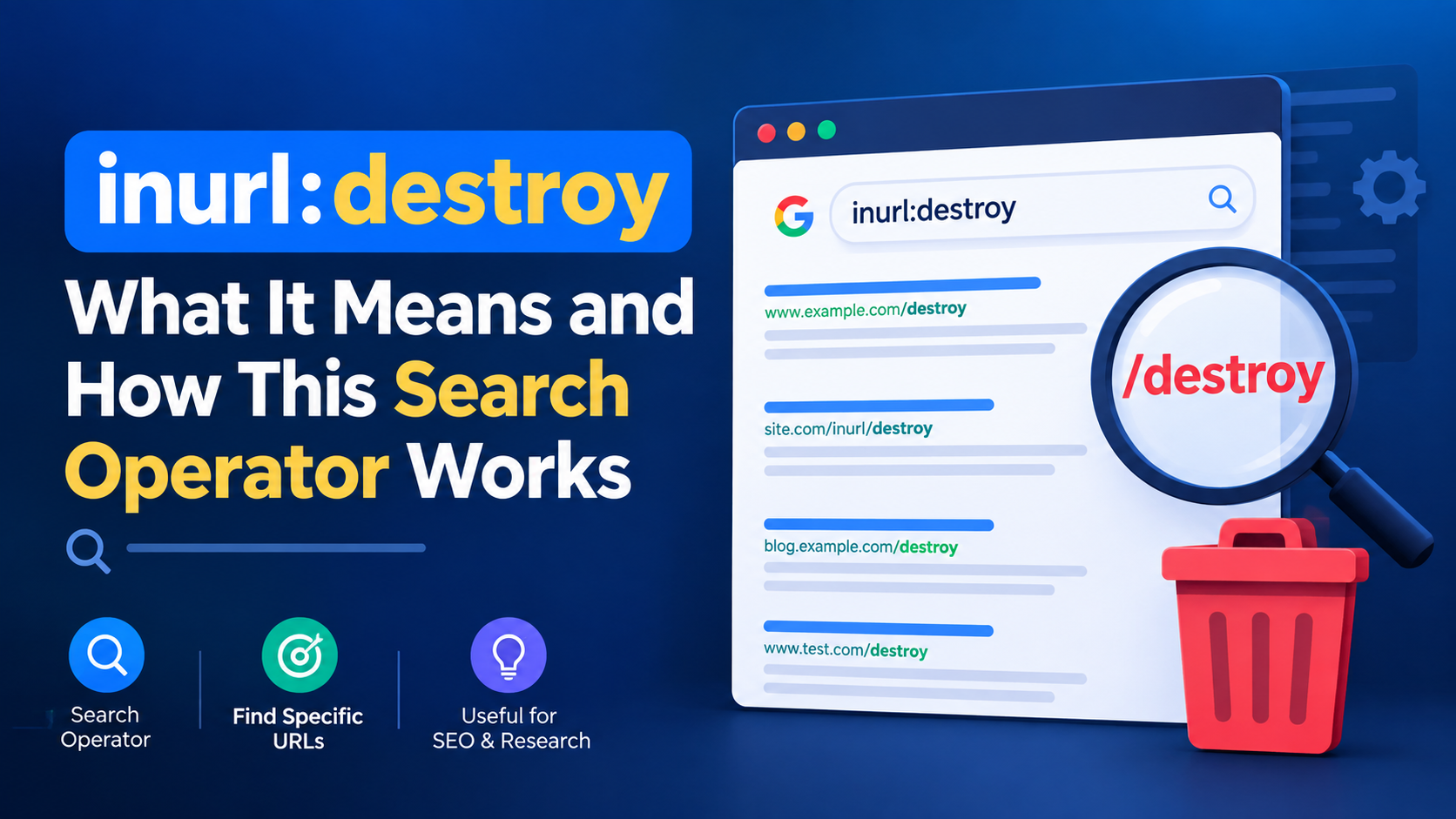
In case you have stumbled upon the search term inurl:destroy, then you might have questions about what it is and what a person does when searching for it in a search engine. It is not really a keyword per se, but “inurl:destroy” comes from the way search engines can filter results based on words being present in a page’s URL.
This search query is something that researchers, SEO marketers, website owners, students, and many others might find useful to use when searching online. Instead of sifting through possibly irrelevant results, URL-based searches take you to the web pages that contain your word of choice.
What Does Inurl:destroy Mean?
Looking inurl:destroy? inurl:destroy searches for the phrase in the URL of pages returned by the search engine, within the anchor text. The search operator inurl: is used to find a word or phrase within a URL or webpage index.
For example, searching for:
Will return pages that have “destroy” in their URL.
The term “destroy” can be used in countless meanings and contexts. The term may appear in articles related to games, entertainment, computers, security, books, history, and so on. That is why “destroy” doesn’t mean that it’s about material destruction or some kind of harmful activity if it shows up in your web address.
How Does the Inurl Search Operator Work?
Search operators help narrow down your online searches and are used to find very specific results. In particular, the inurl: search operator will search the URL, instead of looking for the phrase in the whole page.
For instance, a website might have a URL such as:
example.com/how-to-destroy-old-files
Searching inurl:destroy anywhere on the whole web might bring back 1,000 or 2,000,000 results that contain this term somewhere on the page.
Searching inurl:destroy on the other hand, should only find pages that actually contain the word in the URL itself. This could be useful when researching a huge topic area.
Why Do People Search for Inurl:destroy?
There are several legitimate reasons someone might use inurl:destroy as a search query.
1. SEO Research
URL-based search clues are helpful to SEOs to learn how a website is layered.
Browsing through URLs that contain a specific word can expose site structure, article structure, linked keywords, and so on.
For instance: An SEO researcher wants to learn how the SEO value of destroy is being written across websites. They might travel through URLs that use the word destroy.
2. Content Research
A search operator can be used by writers and researchers to find all pages that are about a specific topic. If “destroy” exists in the URL, this means a page was created based on that topic.
3. Finding Specific Webpages
Some of our viewers know part of the webpage address but not the entire thing. If they recall the address had a word such as destroy in it, then an inurl search can help turn up that result.
It can also be helpful when you are searching a website with a lot of pages or an index of Web content.
Inurl:destroy and Search Intent
Search queries for inurl:destroy can vary widely, and their significance will often be determined by the searcher’s intent.
The term “destroy” itself is a very generic term and has many applications. If used on a gaming-related site, it could be referring to destroying an opponent or a structure within a game, or a technology-related site may use it to describe decommissioning old systems or programs.
Entertainment-based sites can use it to describe theatrical or cinematic depictions of virtual combat or destruction.
Is Inurl:destroy Useful for SEO?
Yes, URL operators can be helpful for SEO research but are not in and of themselves an SEO ranking factor. They are simply search operators that you can use to help find indexed pages. In general, webmasters should always craft URLs that are short, descriptive, readable, and relevant to the page.
Including the word “destroy” in a URL makes sense if the page is an article, product, or guide with that word in the title.
Including keywords that don’t relate to the page, just to game the search results, is not a good URL strategy. A good URL is one that will make sense to anyone who clicks on it.
Examples of Inurl Searches
The same concept can be applied to many other terms. Depending on the search engine and its current support for search operators, users may try searches such as:
- inurl:destroy technology
- inurl:destroy gaming
- inurl:destroy guide
- inurl:destroy file
- inurl:destroy article
Adding another keyword can make the search more specific and reduce unrelated results.
Final Thoughts
Inurl:destroy – Search Queries. Though the above 2 searching operators are keyword-based, the term inurl:destroy used here actually targets the URL. This search operator is really used by people to find pages that have a specific word in their URL.
And inurl: is the URL search operator, and destroy is the keyword that you are searching for.
Hence, it is not a keyword but a URL search operator. Whether you are doing SEO research, just want to know information about something, or want to find a certain site, or are just trying to learn search operators, this format will be very helpful.
The key takeaway: the context around the inurl:destroy changes it from a URL specifier, as it is based on URLs, to a particular URL-targeted search query.
