


Quick Answer: How Apple’s iPhone 18 Pro Alters the Geopolitics of Silicon and Hardware – The iPhone 18 Pro represents the next step in Apple’s rapid ascent into a new leadership era with the appointment of incoming CEO, John Ternus. Stymied by worldwide shortages of component supplies, supply chain vulnerabilities, and rising costs of fabrication, Apple is discarding incremental design updates and opting for complete silicon independence. A brand new A20 Pro chipset built on a 2-nanometer process node; artificial intelligence processed natively on device; and mechanical variable aperture camera technology ensure the iPhone 18 Pro does not operate in a mass-market space, but acts as Apple’s notice of the formal move of its flagship tier into a luxurious high-margin utility product.
🔍 Key Takeaways
- The Leadership Pivot: Incoming CEO John Ternus takes charge, marking a structural shift toward high-margin luxury market isolation.
- Silicon Moat: Apple partners with TSMC for an exclusive 2nm A20 Pro chip, enabling heavy multi-billion parameter AI models to run 100% locally.
- Hardware Innovations: Features a true mechanical variable aperture camera system and a proprietary C2 modem for non-terrestrial satellite connectivity.
- The Margin Defense: To offset global component shortages (“RAMageddon”), Apple is delaying standard variants to Spring 2027 and raising the Pro price point to a baseline of $1,299 USD.
The international smartphone ecosystem had been operating for well over a decade at an accustomed pace and cadence. Iterative engineering had effectively become the main sport of biennial hardware updates – adjusting display brightness by some nits, squeezing out another couple of MHz from the fastest cores, and using software tuning to squeeze more from current camera sensors. But with the march toward Apple’s traditional September event just over the horizon, there’s an altogether more exciting buzz in Silicon Valley today – one that is indicative not of an annual product refresh, but of the start of an all-new corporate chapter.
New COO John Ternus steps in on September 1st as new CEO, and the iPhone 18 Pro series as the first under new executive leadership… and in front of a global hardware RAM drought, fierce fights over how they can deploy AI into their Asian facilities, and a surprise data security hack to the iPhone India manufacturing plant…Apple will pull the lever to make the big macroeconomic play.
Instead of protecting us consumers from this industrial tsunami, Apple is inviting it aboard: the iPhone 18 Pro is less an iPhone and more Apple’s unequivocal proclamation of full silicon control, architectural reform, and luxury separation.
The 2-Nanometer Revolution: Architecture, Transistor Density, and the Cost Matrix
| iPhone 18 Pro Core Architectural Matrix | |
| System-on-Chip (SoC) | A20 Pro (TSMC 2nm N2 Node) |
| Memory Interface | 12GB to 16GB LPDDR6 (96-bit Bus Width) |
| Thermal Management | Stainless Steel Vapor Chamber Cooling |
| Base Storage | Starts at 256GB (128GB Tier Retired) |
| Base Retail Pricing | $1,299 USD ($200 Premium Over Predecessor) |
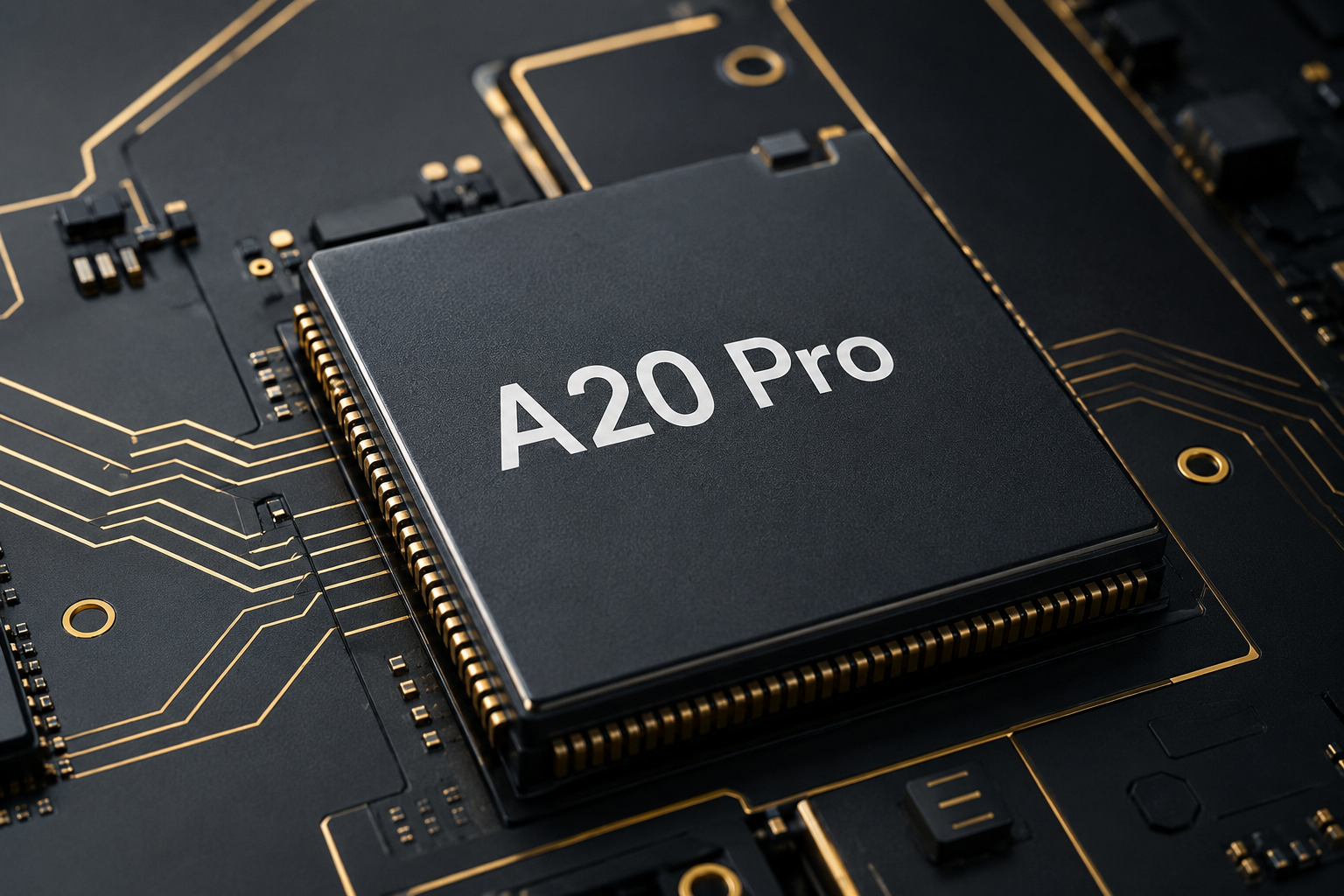
Underpinning all of Apple’s new architectural approach at the core is the new A20 Pro processor. For years, the market has approached the physical limitations of 3-nanometer processes. With iPhone 18 Pro, Apple will be the foundation partner for TSMC’s disruptive 2-nanometer process node (N2). This has the effect of miniaturizing gate lengths and fitting even more billions of transistors into space the size of a fingernail.
But with the shift comes enormous cost challenges. According to the supply chain intel shared by MacRumors, wafer prices from TSMC for its 2nm technology will cost at least 50% more compared to the previous generation 3nm silicon owing to the very expensive nature of the High-NA EUV lithography equipment. To circumvent the incredibly increased manufacturing prices, Apple is tweaking its in-house chip packaging technique.
For the A20 Pro, the technology will adopt Wafer-Level Chip-Scale Packaging (WLCSP) and multi-chip modules.
This new architecture will move high-speed memory modules a little further from the core compute die, structurally inhibiting its tendency to thermally throttle during a prolonged and intensive computing task.
Statistically, it’s good for a raw 15% speed increase with a mind-boggling 30% power decrease. And instead of using that efficiency gain to shave weight off our next, ultra-thin iPhone, Apple appears to be using it to tackle intensive, regional computation.
Navigating “RAMageddon” and the Core AI Strategy
Enterprise-level high-bandwidth memory (HBM) being rapidly consumed by the hungry maw of hyperscale enterprise AI data centers is causing a global shortage in semiconductors that the industry has taken to informally refer to as ‘RAMageddon’. As enterprise servers hoard available HBM, it’s leaving the consumer hardware sector scrambling for whatever’s left.
Apple’s path forward is through a structural shift in its memory pathway with the iPhone 18 Pro, adopting next-generation LPDDR6 with a massive 96bit bus. Apple ensures a floor of 12 GB RAM on its Pro model (escalating to 16 GB on its top-tier models) to form a defensive hardware barrier around its unique software stack.
| Traditional Hybrid AI | iPhone 18 Pro On-Device AI |
| iPhone Hardware
(Basic Processing) |
iPhone 18 Pro
(A20 Pro + LPDDR6) |
| 🌐 Internet Connection Required | ⚡ Zero-Latency / Native |
| Cloud Servers
(Heavy Processing) |
Multi-Billion Parameter
(LLMs Run 100% Locally) |
This compact storage capacity array is a requirement of Apple Intelligence for use within Apple’s future iOS 27 ecosystem. Previous LLMs operated in a hybrid mode, processing complex consumer commands in the remote cloud, whereas Apple Intelligence within the forthcoming iPhone 18 Pro is designed to process these LLM computations completely on the device itself-large models running billions of parameters.
As such, it can entirely bypass latency delays inherent in network handshake processes and enables an on-device, locally operated, and more secure system for contextual awareness, personal semantic indexing, and instantaneous audio translation.
Optics Re-Engineered: The Variable Aperture Paradigm

For over half a decade, mobile camera innovation has essentially been an algorithmic arms race. Computational photography, semantic rendering, and pixel-binning were deployed to mask the stubborn physical limitations of smartphone-scale optical glass. The iPhone 18 Pro challenges this paradigm by introducing an actual mechanical variable aperture mechanism to its primary 48-megapixel sensor array.
1. Camera Optics Table (Variable Aperture)
| Low-Light Environments | Direct Daylight / High Light |
| Physical Iris: Open Wide | Physical Iris: Constrict |
| 🌕 Captures maximum raw light for clean images. | ☀️ Controls exposure to stop highlights clipping. |
| 📸 Delivers a natural, physical bokeh blur. | 🎯 Maximizes edge-to-edge frame sharpness. |
| 🛡️ Eliminates computational software noise. | 🚫 Eliminates artificial edge artifacts. |
2. Release Calendar Table (September vs. Spring)
| SEPTEMBER 2026
(High-Margin Luxury Tier) |
SPRING 2027
(Mass-Market Volume Tier) |
| iPhone 18 Pro | Standard iPhone 18 |
| iPhone 18 Pro Max | iPhone 18e |
| iPhone Fold / Ultra | iPhone Air (Gen 2) |
| 💼 Targets early adopters and premium buyers | 🛒 Captures price-conscious buyers later in cycle |
| 📈 Designed to maximize corporate gross margins |
Instead of a fixed lens, it has a real physical iris which can be enlarged and contracted in real time based on measurements of available light.
- In challenging, low-light environments, the mechanical aperture flares open to its largest aperture to dump all the light onto the custom Sony sensor and not generate digital noise at high ISO.
- Under harsh, direct sunlight, as the iris contracts its inner chamber, it extends the depth of field, which permits us to record intricate detail and maintain fine-sharp imaging of the entire frame.
Removing Software-Simulated Depth-of-Field: This is the final real-world functionality difference that closes the gap between a mobile system and a professional mirrorless or DSLR, by using actual physical depth of field rather than simulated bokeh with weird edges like pretty much every algorithmic portrait mode.
Geopolitical Clearance and Global Localization
Hardware chops are of no use if you can’t roll it out geographically. In a landmark regulatory win, as confirmed by PhoneArena reports, Apple Intelligence has been given a green light for commercial rollout by the Cyberspace Administration of China. Considering China’s strict and tightly controlled security standards around generative AI models, this is a remarkable commercial triumph for Apple.
By avoiding its Western AI partners (e.g., OpenAI) in mainland China for local sovereign needs, Apple has designed the iPhone 18 Pro for the Chinese market using localized, deeply integrated partnerships with domestic giants for its locally deployed data processing engines. This strategic dexterity enables Apple to roll out its most important, high-margin international market with its primary selling features operating right out of the gate and mitigate any resulting localized sales drops.
Cellular Independence: The C2 Baseband and Extraterrestrial Networks
Another important moment for history lurked on the logic board as well – Apple’s in-house C2 modem architecture made its official debut. In fact, Apple spent close to a decade on a plan to disentangle itself from its costly legal battles. And reliance on companies like Qualcomm for the baseband components that control wireless connectivity.
The bespoke C2 modem takes it far beyond simply handling legacy 5G millimeter-wave connectivity with reduced power consumption. Having been natively constructed around new NR-NTN (New Radio Non-Terrestrial Network) standards, the C2 baseband evolves satellite capabilities from merely a dormant fail-safe to a functional, everyday feature.
Structurally, the iPhone 18 Pro is prepared for reliable, low-bandwidth data transfer, web browsing, and secure networking on the fly using low-Earth-orbit satellite constellations in situations when terrestrial cellular connectivity is entirely unavailable.
Industrial Design, Thermal Barriers, and the Tata Vulnerability

The aesthetic is also becoming less industrially focused with this latest couple of generations. Technical documentation which has been unearthed as part of a recent cybersecurity breach at its Indian manufacturing partner Tata Electronics shows the iPhone 18 Pro with an updated seamless one-piece unibody design. Where the seams met previously are still very, very smooth. But they’ve been reduced so they’re invisible to the naked eye at a microscopic level to make it one solid slab of glass and metal.
The biggest visual overhaul centers on a darker, more premium “Dark Cherry” colour, plus a drastically reduced Dynamic Island, which is now possible thanks to multiple main ambient Face ID sensors being moved wholly beneath the live OLED pixel substrate.
| iPhone 18 Pro Chassis Layer Display Layout |
| OLED Substrate Display Layer (Top Active Screen) |
| Punch-Hole Camera Cutout (Physical Camera Lens) |
| Under-Display Face ID Sensors (Hidden Security Modules) |
But these engineering triumphs don’t come without a cost. To handle all the compute-heavy on-device AI processes and manage heat, Apple’s internal battery density and its cooling are significantly updated. Filings with regulators suggest larger raw battery cells and physical battery cell construction to support more raw battery power.
And in response to all that heat, Apple will be employing an internal vapor chamber with a stainless steel enclosure that uses a micro-fluid circulation method to push excess heat from the primary logic board. All these internal modifications contribute to the overall mass of the devices, making the iPhone 18 Pro line some of the heaviest flagship cycles Apple has ever produced – closing in on 240 grams for the most expensive units.
The Macroeconomic Play: Splitting the Calendar
And I think the most interesting thing about the iPhone 18 is actually not about the tech spec at all, but the delivery logistics. It’s the first time in modern retail that we have seen an iPhone with a bi-seasonal distribution plan.
- In September 2026, Apple will only be selling its high-end ultra-premium gadgets – the iPhone 18 Pro, the iPhone 18 Pro Max, and a very likely luxury foldable under the “Ultra” banner.
- The standard: The company appears to be holding back its standard, high-volume iPhone 18 models for a later “second window” of the Spring 2027 rollout.
| SEPTEMBER 2026
(High-Margin Luxury Tier) |
SPRING 2027
(Mass-Market Volume Tier) |
| iPhone 18 Pro | Standard iPhone 18 |
| iPhone 18 Pro Max | iPhone 18e |
| iPhone Fold / Ultra | iPhone Air (Gen 2) |
| 💼 Targets premium buyers and protects gross margins | 🛒 Captures price-conscious buyers later in the cycle |
The calendar split is another conscious move by John Ternus and his team’s management and leadership that is a direct attempt to defend the company’s gross margins in the face of rising prices of many components and of prices in the supply chain across the globe. Apple is pushing its massive base of customers to their most expensive, highest-margin configurations of its products.
That move is what, combined with the price of 2nm silicon, analysts believe the iPhone 18 Pro could start at $1,299 USD – a $200 hike over the traditional base price point for such storage, removing the previous $1099 tier in the process.
The Final Outlook
If this is, indeed, some kind of defiant hand-off of Apple’s executive future, then the iPhone 18 Pro makes an unequivocal statement. This isn’t a device that takes a break from catering to the general public for its own sanity. It is actively ditching the mass market blanket for some strictly luxury function, and that’s it.
Forcing custom silicon to run on a tighter lead, engineering mechanical lens control overrides, and wrestling for sensitive international approvals from governments, Apple is essentially betting on the immutability of its premium-driven lock-in.
The success of this experiment is entirely contingent on the answer to “is an extra $200 baseline charge the end of days” this year, but Cupertino is ready for the revolution.
