

Quick Answer: Agentic AI News covers the latest developments in autonomous artificial intelligence systems that can plan, reason, make decisions, and complete tasks with minimal human intervention. It includes updates on AI agents, enterprise adoption, new AI models, industry trends, business applications, cybersecurity, and future innovations that are transforming how organizations use artificial intelligence.
Introduction
AI is moving much faster than expected. The past two years have seen huge breakthroughs and the emergence of something completely new, moving from being an interface that can answer questions and produce simple text to a full new concept – Agentic AI. This is because of the recent emergence and understanding by various business industries across every sector of the potential of AI.
Today, it is no longer enough for businesses to find AI that only takes commands.
They want the AI to accept and understand goals, build plans, and make intelligent decisions on its own. More importantly, they are looking for it to work with existing software tools and accomplish complex tasks without any (or very little) human involvement. This trend has resulted in Agentic AI becoming the fastest-growing tech area. Every week sees a new autonomous AI agent released by industry giants, the deployment of automated agents by companies on a large scale, and the community discovering new steps towards artificial intelligence for a wide range of complex issues.
Agentic AI is of importance whether you are a business leader, an engineer, a tech enthusiast, an investor, or simply fascinated by the direction in which artificial intelligence is heading.
In this post, you’ll discover exactly what is the meaning of Agentic AI is, what it actually entails, its advantages, and the last development and future predictions about Agentic AI.
Agentic AI at a Glance
| Feature | Details |
|---|---|
| Primary Keyword | Agentic AI News |
| Technology | Autonomous Artificial Intelligence |
| Main Purpose | Automate multi-step tasks and workflows |
| Industries | Healthcare, Finance, Cybersecurity, Software, Marketing |
| Benefits | Productivity, Automation, Faster Decisions |
| Challenges | Security, Accuracy, Privacy, Regulations |
| Future Outlook | AI Agents will become digital coworkers |
What Is Agentic AI?
Agentic AI refers to artificial intelligence systems that can plan, reason, execute actions, adapt to changing situations, and pursue objectives with limited human supervision.
This is unlike any current AI, where you command, and it responds. Instead, it is as though you’re ‘hiring’ a digital worker who is given an objective – not just a single command. They then work out what the best actions are, break it down into multiple steps, launch your software tools and apps, crunch the information, and continuously verify whether the job has been done.
If you told your AI something like: “Research the best tech firms in the world, produce an exhaustive list of 20, and find out how to acquire each of them,” what most would be capable of is producing the list for you.
Agentic AI would find the list and the methods required to secure them – entirely automatically. And it’s precisely this difference that has the tech world abuzz worldwide.
Why Agentic AI News Is Trending Everywhere
There is a simple reason why agentic AI news dominates technology headlines.
The good news is that companies now know they can get productivity gains that go beyond simply AI-created text and imagery, and it is all about having intelligent systems do real work for us.
This last year, major tech players have spent tens of billions of dollars trying to get powerful AIs doing interesting things such as:
- Managing business workflows
- Performing software development tasks
- Conducting market research
- Handling customer support
- Automating financial operations
- Monitoring cybersecurity threats
- Managing cloud infrastructure
- Assisting healthcare professionals
- Coordinating enterprise operations
Instead of automating isolated tasks, Agentic AI is starting to automate entire business processes. That’s one of the largest technology shifts in years, comparable to how cloud computing remade enterprise software.
How Agentic AI Is Different From Traditional AI
Agentic AI vs Traditional AI
| Feature | Traditional AI | Agentic AI |
|---|---|---|
| User Input | Single Prompt | Goal-Based |
| Decision Making | Limited | Autonomous |
| Task Handling | One Task | Multi-Step Workflows |
| Memory | Limited | Long-Term Context |
| Tool Usage | Basic | Multiple Applications |
| Human Supervision | High | Low to Moderate |
| Productivity | Assists Users | Completes Processes |
People think Agentic AI is the same as ChatGPT, but there’s no confusion here. Both are related, but the functions they serve are separate. An “AI like ChatGPT is centered around a response, and its life ends after generating it. For instance, when you ask ChatGPT a question and get a response, your work ends, but it doesn’t extend beyond it. Agentic AI functions contrary to this idea.
Instead, the agent makes several decisions along the way, trying to get the big objective accomplished.
For example:
Traditional AI:
- Write an email
- Summarize a report
- Translate a document
Agentic AI:
- Read incoming emails
- Identify urgent requests
- Draft personalized responses
- Check your calendar
- Schedule meetings
- Update CRM records
- Notify your team
- Follow up automatically
- It’s designed to handle a whole workflow, not just one function. The fact that technology researchers view Agentic AI as AI 2.0 is mostly because it can “think through” a whole chain of events.
The Rise of Autonomous Digital Workers
“Digital workers” comes up in recent agentic AI news as well. A digital worker is essentially an AI agent trained to handle the kinds of duties a human would typically do.
Unlike chatbots, these systems can:
- Learn company workflows
- Access enterprise software
- Analyze business data
- Coordinate across multiple applications
- Execute repetitive operations
- Improve performance through feedback
- Operate continuously without fatigue
More businesses are already thinking of these agents of AI not just as software, but as productivity partners.
Many companies already have digital workers helping customer service reps, software engineers, accounting, project management, and marketing departments.
They aren’t taking away every job from human beings, but they can take over tedious clerical tasks, letting us focus on strategy, creativity,ity and problem-solving.
Why Businesses Are Investing Billions in Agentic AI

All big technology trends get to a point where major enterprises begin pouring money into it. For agentic AI, we’re now here.
Here are a few reasons why executives believe autonomous AI agents will revolutionize businesses.
Improved Productivity
Tasks done manually by staff every year. Thousands of hours wasted on them. Let AI do it – an autonomous agent to handle tedious tasks.
Rather than, for example, having staff move data from system to system, create reports, arrange meetings, or handle queries asked many times by your customers, an autonomous agent can take care of it.
Faster Decision-Making
Organizations produce large volumes of data. Agents with advanced AI analyze information and make decisions almost instantaneously while they identify key patterns to recommend business actions to decision-makers.
Executives gain access to the information without the need for the time-consuming manual report writing that goes with it.
Lower Operating Costs
Lower operational costs: Automation can lower business operational costs.
AI agents perform tasks in the background and allow workers to focus on higher-value work.
Many find that they increase efficiency while maintaining customer experience.
Around-the-Clock Availability
Artificial intelligence agents (AI) don’t need breaks or hours like their human colleagues.
The ability of an AI agent to oversee, answer, manage, or identify things throughout the world is an ideal solution for corporations in several time zones.
Industries Driving the Biggest Agentic AI News
Top Industries Using Agentic AI
| Industry | Common Applications |
|---|---|
| Healthcare | Patient Records, Scheduling, Diagnostics |
| Finance | Fraud Detection, Risk Analysis |
| Cybersecurity | Threat Detection, Automated Response |
| Software Development | Coding, Testing, Documentation |
| Marketing | Content Planning, Campaign Analysis |
| Customer Service | AI Chat Support, Ticket Automation |
| Manufacturing | Predictive Maintenance, Quality Control |
Although experimentation with Agentic AI can be observed in most industries, several industries are at the forefront of its adoption.
Enterprise Software
While the AI is likely to work “backstage” more often than not, enterprise software vendors are increasingly weaving AI agents into their products.
“We are finding that the way users are starting to think is they don’t want to log into three or four or five applications a day. Instead, they are finding it helpful to have AI agents that can interact with calendars, with email, with their databases, with their spreadsheets, with their CRM and with project management,” he explained.
Software Development
Programming is one of the fastest-developing use cases of autonomous AI.
These kinds of AI agents are helping programmers to:
- Writing code
- Finding bugs
- Suggesting improvements
- Running automated tests
- Reviewing pull requests
- Updating documentation
- Monitoring deployments
Instead of displacing engineers, agents accelerate development time by handling tedious code.
Healthcare
Agentic AI for Healthcare Organizations. Healthcare organisations are looking at this technology for admin-related processes.
Potential uses could be:
- Appointment scheduling
- Medical record organization
- Insurance documentation
- Clinical workflow management
- Patient communication
- Diagnostic assistance
- Hospital resource planning
Doctors/nurses are spending less time filling out forms and seeing patients instead.
Financial Services
Automated Payment and Invoice Processing: Banks and financial firms handle many millions of transactions daily.
Agentic AI will help automate:
- Fraud detection
- Compliance monitoring
- Customer onboarding
- Loan processing
- Financial reporting
- Investment research
- Risk analysis
These systems examine huge volumes of data at a rate far higher than traditional software applications.
Cybersecurity
One of the biggest prospects for Autonomous AI to become reality lies in Cybersecurity.
In place of analysts detecting and responding to threats manually, Autonomous AI Agents work 24/7. This enables the AI to:
- Monitor networks
- Investigate suspicious behavior
- Prioritize security alerts
- Launch automated responses
- Isolate compromised systems
- Generate security reports
Because the nature of cyberattacks evolves and intensifies each year, it is smart to have more intelligent AI agents help cut down response time.
The Technologies Powering Agentic AI
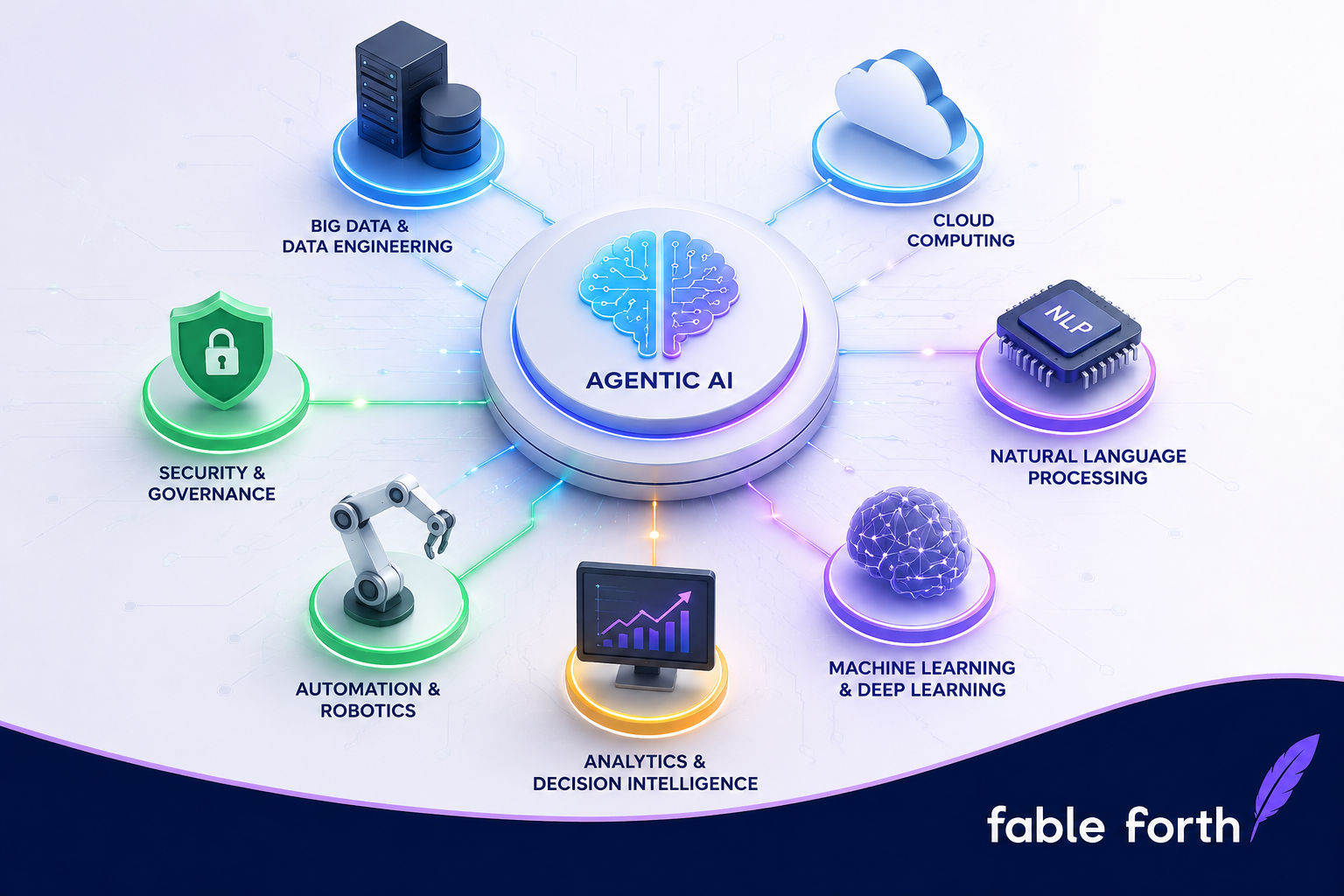
It’s thanks to these technological innovations that we now have sophisticated self-operating AI.
Large Language Models
- Comprehending how to process your instructions.
- Planning effectively to make the right decisions.
- Explaining their choices while conversing completely naturally.
Memory Systems
Early AI systems had no memory of prior actions. Instead of just responding to the current request, modern agents retain memory over extended, multi-step processes.
They’ll remember your goals, monitor which tasks you’ve already accomplished, and use that information to make informed decisions in subsequent steps.
Tool Integration
The power of an agentic AI system emerges when this agent can talk to external software.
Such an agent could speak with:
- Email platforms
- Cloud storage
- Business databases
- CRM systems
- Search engines
- Coding environments
- Business intelligence tools
- Enterprise applications
And instead of merely outputting language, these artificial agents take real-world actions in virtual worlds.
Multi-Step Reasoning
The most critical advancement might just be structured reasoning.
Rather than just providing a solution right away, agentic AI analyzes different paths to a solution, weighs different solutions, flags any risks, and selects the optimal one before taking action.
That planning capacity differentiates agentic AI from conversation AI and is the reason why it is shaping up as one of the most compelling frontiers in technology right now.
The Biggest Agentic AI News Shaping the Industry
The velocity of innovation around autonomous AI is soaring. Stuff that used to be limited to research papers is finding its way into daily operations at businesses. New AI agents that do even more, new reasoning models that are stronger, new enterprise tools, and new partnerships emerge with breathtaking frequency – nearly every month.
What we are seeing rise most sharply in agentic AI news today is the move from mere AI assistants to full-on digital teammates.
Instead of just generating isolated answers, these agents are increasingly expected to integrate into the entire enterprise IT estate, pursue a long-term goal, and work with a person for the entire life cycle of a task or project. Tech leaders are betting their company futures on it – it is going to be the basis of enterprise software going forward.
Enterprise Adoption Is Accelerating
Many organizations now wonder less “if” AI can be used and more about how fast the smart agents can be brought to market, woven into current operations. A good majority of large enterprises are already experimenting with Agentic AI in their financial and HR departments, as well as within the software engineering, cybersecurity, legal operations, customer support, and supply chain operations, among others.
Rather than installing one large AI across the entire organization, most are rolling out agents for the work of particular tasks, such as an agent to watch over inbound customer calls, to produce sales forecasts, or to watch operational data for unusual activity.
These agents can communicate with each other and help an employee complete tasks autonomously, for instance.
Organizations can gradually grow with the use of AI, but can avoid introducing too many, too quickly and jeopardizing existing operations.
Major Technology Companies Racing Ahead
The competition for the Agentic AI market just went into hyperdrive. In fact, it’s pretty safe to say that every big tech player has an AI agent platform either in development or already in their beta programs. Think of AI agents that reason, plan, and execute a wider range of more and more complex tasks.
Software vendors are adding AI right into office productivity tools; cloud platforms are releasing agent frameworks that help connect AI with business apps and enterprise databases; hardware vendors are making chips for AI inference; and new startups keep on creating more agent platforms designed for automation.
Because of the intensity of the competition, we can expect more speed, better reasoning, more security, more memory, and improved tool integration. What this means for your business: the pace of innovation will make AI systems more powerful and, crucially, easier for less technical people to use.
Multi-Agent Systems Are Becoming More Common
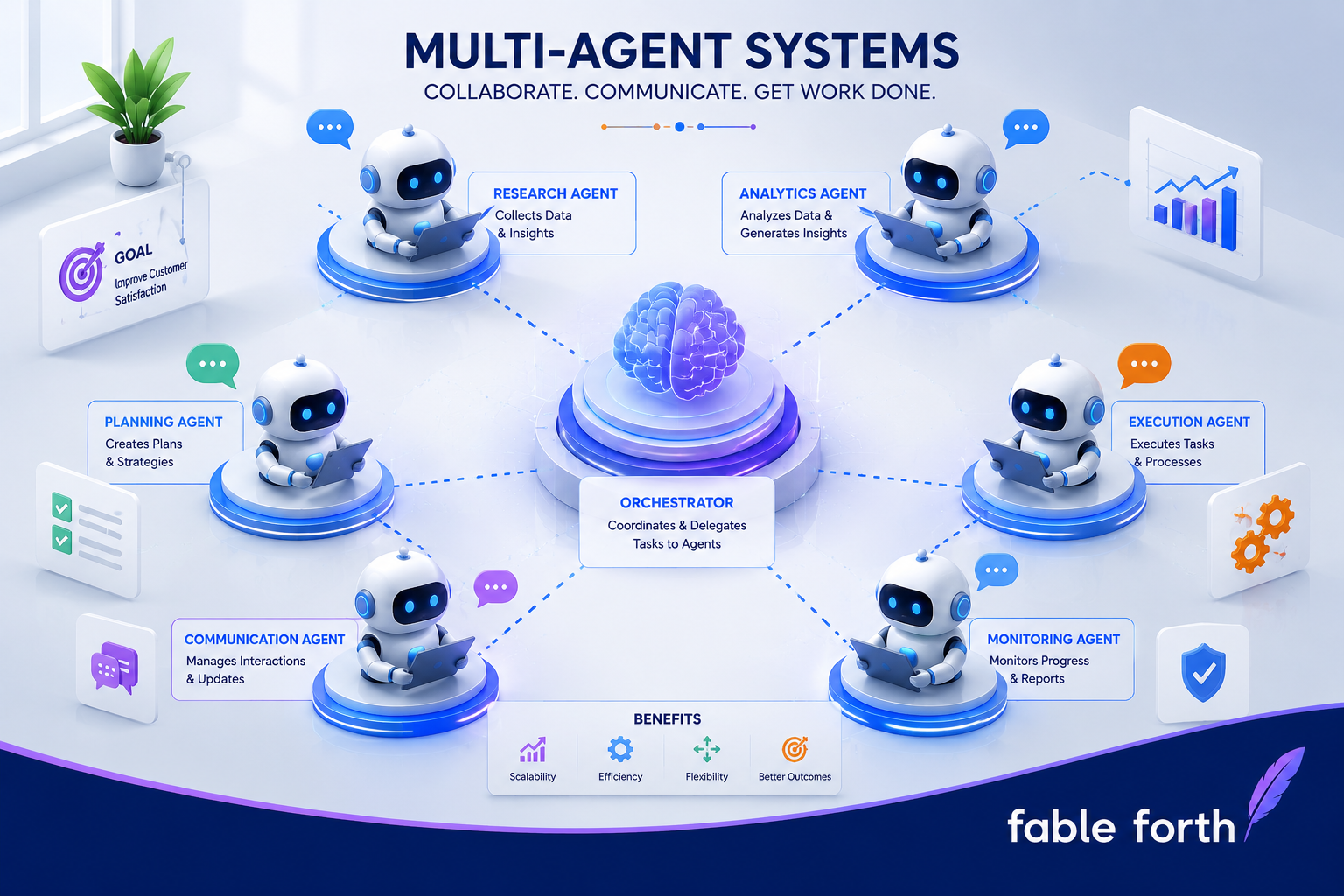
One of the areas that has had us most excited from recent agentic AI news has been the rise of multi-agent coordination.
What this essentially means is rather than relying on one agent for all the work, companies are now using armies of specialized AI agents for different parts of the process.
Take a marketing department launching a new product. Instead of asking one AI assistant to write copy, set up campaigns, and run ads, you’d task different agents to do each of those pieces.
One agent researches competitors.
Another analyzes customer behavior.
A third writes marketing content.
A fourth designs campaign schedules.
Another monitors advertising performance after launch.
The result: accelerated execution, increased precision, and expanded scale.
Collaboration Among Many: This process often results in agents communicating with one another and exchanging information to work toward the same goal.
It’s no wonder that the AI field widely considers the future to be in collaborative multi-agent systems for enterprise automation.
Agentic AI Is Transforming Workplace Productivity
Productivity software has evolved dramatically over the past decade.
Email replaced paper communication.
Cloud collaboration replaced local storage.
Video conferencing connected remote teams.
Now Agentic AI is beginning another transformation.
The background tasks that workers used to have to stitch together across dozens of applications are now being automatically managed by smart software agents. The employees need only describe a desired outcome.
The agents create checklists and coordinate workflows, manage information, schedule meetings, build reports, interface with other software applications, and manage project deadlines.
What a difference that makes in our interaction with machines.
The users are all about outcome. The robots can figure out all the technicalities.
Real-World Business Applications
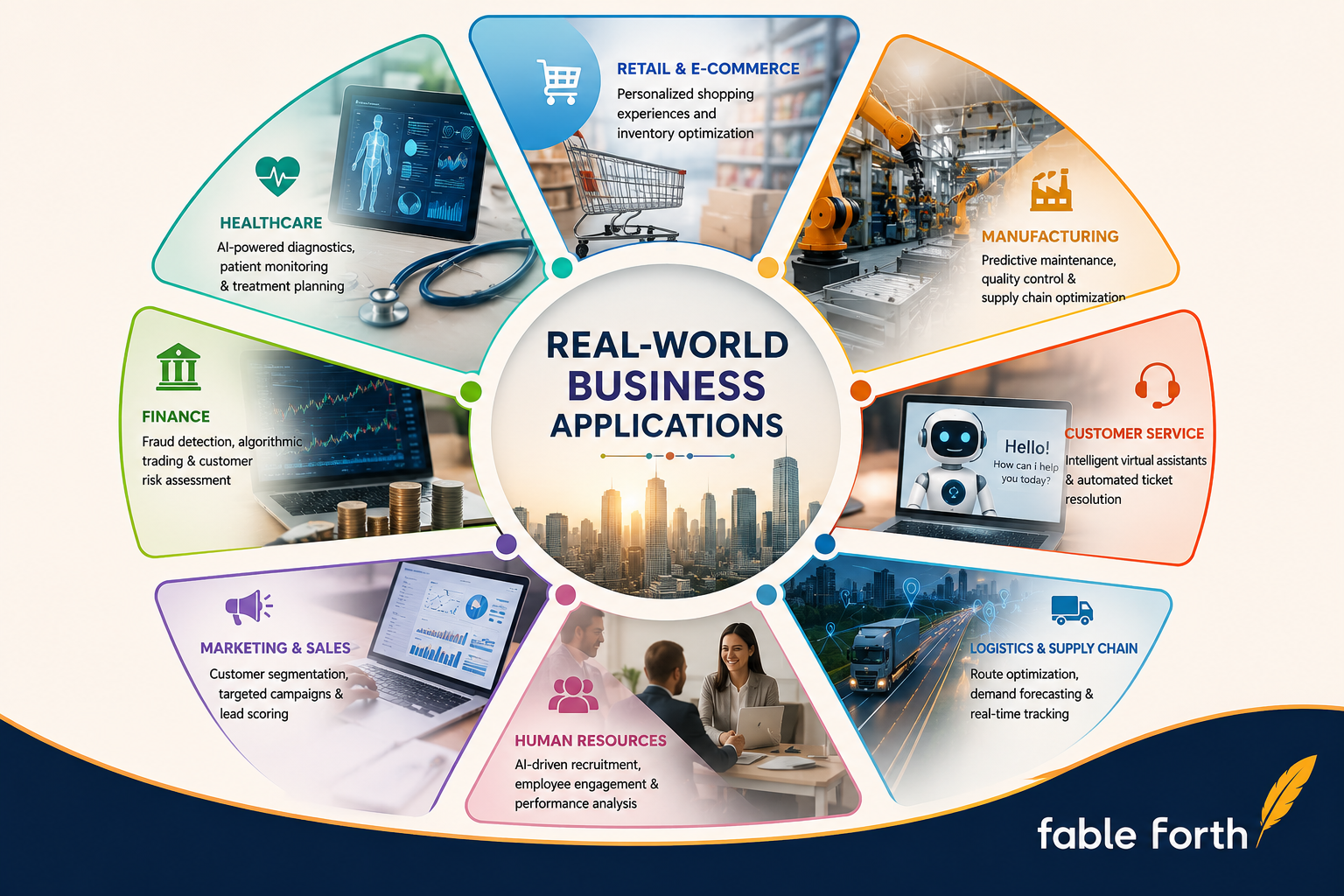
The growing interest in agentic AI news is driven largely by practical business results.
Organizations across industries are already exploring real-world implementations.
Customer Service
The AI agents answer the frequent and obvious customer queries, access customer account data, modify account details, escalate challenging and tricky scenarios, and craft automated outgoing messages.
Customer Support staff invest their valuable time focusing on intricate issues and do not waste it repeating themselves.
Human Resources
Increasingly, recruitment teams utilize AI agents to sort job applications, filter resumes, set up interviews, answer candidates’ questions, prep documents, and track the hiring process.
Automation reduces the administrative burden, allowing recruiters to concentrate on judging the candidates and the candidate experience.
Marketing
Marketers gain from AI agents who can monitor the market, track campaign performance, create reports, schedule content calendars, observe competitors, and help produce content.
This frees marketers to work on the big ideas of campaign strategy and brand development.
Finance
The world of Finance is littered with thousands of repetitive, manual processes. Agentic AI helps with invoice processing, checking expense reports, financial modeling, budget management, regulatory compliance, and more.
Automation boosts the overall productivity of operations and speeds up the pace of doing business through reduction of human interaction time.
Manufacturing
Manufacturing enterprises are exploring AI autonomy for process planning, inventory optimization, predictive maintenance, vendor cooperation, logistics supervision, and quality control.
The use of smart automation facilitates decreased process disturbances.
Why Developers Are Excited About Agentic AI
Early adopters of the earliest fully autonomous AI systems are now programmers. The act of writing code accounts for only some of what a software programmer must do. They must consult docs, fix errors, upgrade tools and dependencies, write tests, track software status in the cloud, and tend the existing application.
Agentic AI can help you with this entire stack.
Modern AI agents not only write code fragments, but they can also help to understand and translate business requirements, suggest architecture, fix code incompatibilities, perform and execute tests, check quality, and even write docs. This speeds the delivery of engineering projects while upholding code quality.
The Role of Memory in Agentic AI
Memory will soon become one of the most recognizable traits of intelligent AI agents. Most conversational AI platforms approach each prompt as a standalone transaction, the equivalent of a fresh request each time. Agentic AI behaves differently.
These systems recall previously set objectives, keep a record of finished tasks, retain crucial context, and revise subsequent actions in accordance with their past experiences.
The result: Automation that is more personal and reliable for companies. A customer service bot that retains the context of past conversations. A project manager who is mindful of progress against key milestones. An investment analyst who recalls regular report generation.
The presence of a long-term memory is what makes agentic AI less of a temporary, on-demand assistant and more of a skilled colleague.
Challenges Slowing Widespread Adoption
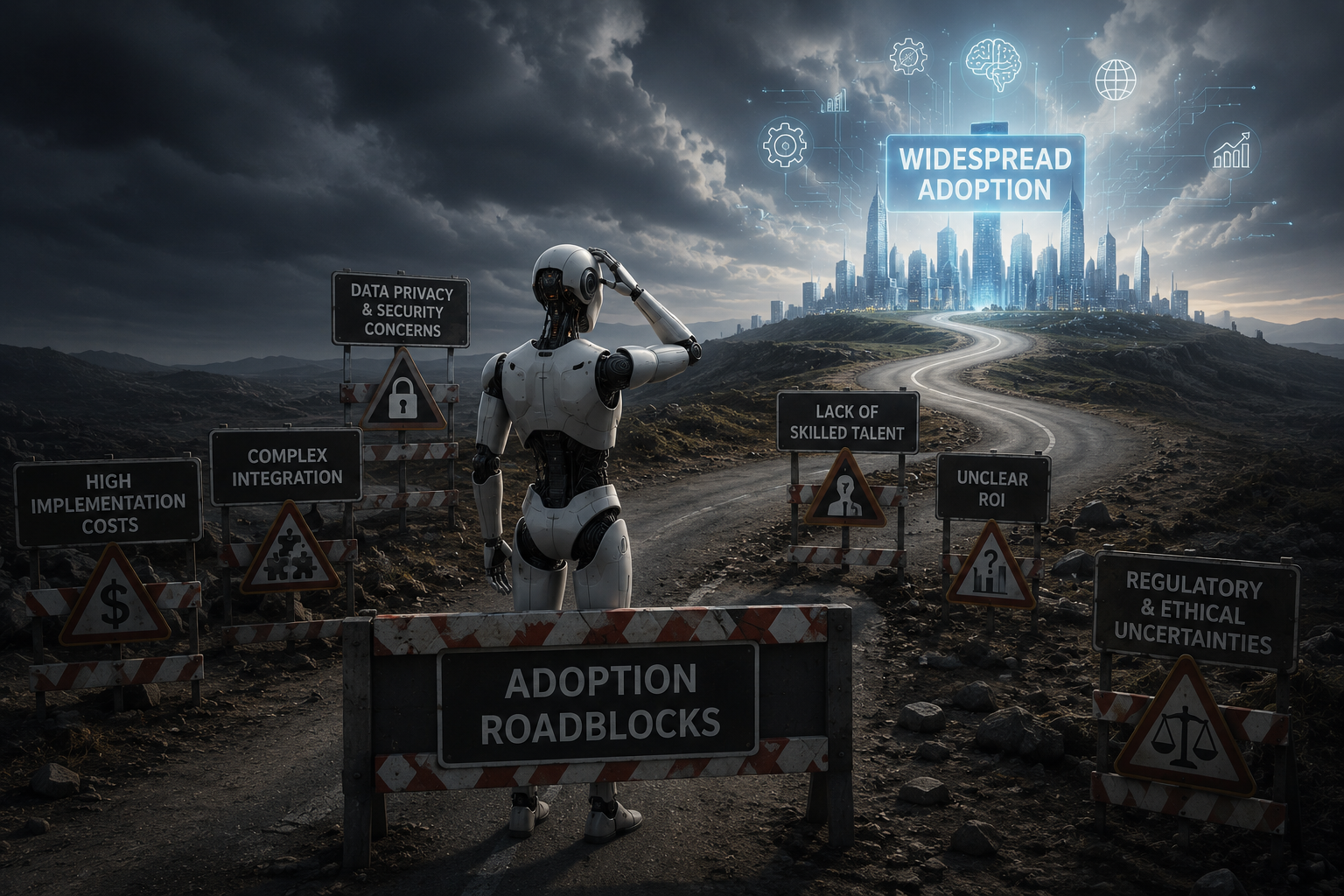
The future does hold hope for the new emerging generation. But there are still significant obstacles yet to be dealt with.
Reliability
Companies will only give responsibility for high-impact work to AI if they can trust it. Many are using sophisticated tools to catch AI errors, while others are hoping for a “foolproofing” approach that prevents major errors. Some are simply taking a measured risk.
The “little reasoning slip-ups that lead to expensive business trouble are the major worry.
“There has been huge investment in creating and strengthening the validation systems that act before AI action is executed.
Security
In most cases, autonomous AI needs access to your confidential systems. Ensuring that confidential business information remains just that-confidential-is now one of the primary concerns at the deployment stage.
The stringent permission management, encryption, authentication, and monitoring systems prevent many security threats.
Regulatory Compliance
Industry compliance-Most businesses have legal requirements to adhere to. When you use Agentic AI, it is critical to ensure your automated decisions are in line with legal regulations and that the data used is handled in accordance with legal regulations, company policy, and data privacy laws.
Still need transparency-The fact of the matter is that humans do not trust AI decisioning processes at all.
Human Oversight
Most people agree that AI should augment human judgment rather than substitute it. In a typical setup, people review significant decision points, give approvals for high-risk actions, and steer strategic choices. People make the calls on cases that involve ethical nuances, complex legal challenges, or business strategy.
Ethical Questions Surrounding Agentic AI
Ethical considerations grow ever wider as our AI becomes more autonomous.
- Who is responsible if an AI agent makes an incorrect decision?
- To what extent should businesses grant authority to autonomous systems?
- In what ways should organizations explain AI-generated decisions to customers?
- By what means can companies prevent unintended bias?
Questions about who controls them – and on what basis – are only growing in significance with the expanding role of AI agents in all sectors, including health, financial services, government, education, and across businesses.
What’s needed is the development of responsible AI – with security, transparency, accountability, fairness, and always human intervention. Companies that do this can win more trust with their customers, as well as regulators.
Why Small Businesses Should Pay Attention
The common thought is that Agentic AI is ONLY for huge enterprises. That thought is being challenged FAST.
Cloud-based AI agents mean even smaller businesses and startups can afford AI-powered automation without an enormous IT budget.
Here’s one thought about a business owner of a smaller business in the not-so-distant future leveraging AI agents:
- Manage appointments
- Respond to customer emails
- Monitor inventory
- Generate invoices
- Analyze sales performance
- Create marketing reports
- Organize documents
- Track business expenses
Instead of a unique software solution for each aspect of your business, companies are embracing AI agents working in tandem to take on several duties within the same workflow.
If you’re an organization that lacks ample resources, it can translate into one of the top competitive advantages for the decade.
The Future of Agentic AI
But if what we’ve seen in the last few years is any clue, agentic AI has a lot more work to do. Autonomous AI agents “will be a normal part of daily operations within five to 10 years,” according to industry experts.
“Instead of bouncing around to different apps to get work done, an employee will simply state what the goal is, and the intelligent agents can handle all the work behind the scenes.”
Future AIs are going to be more consistent, understand context better, and plan for the future. They’ll be aware of the history of a project, have a sense of the organization’s preferences, work with other AIs, and get smarter the more they are used and as the process is repeated.
Far from replacing the human workforce, agentic AI promises that it’ll assist us. They won’t replace human creativity, and it’s thought they’ll actually augment what we’re able to do.
Emerging Innovations to Watch
Technology evolves quickly, sotoday’s AI will look drastically different just a couple of years from now.
Some of the major changes that can be anticipated for the next wave of the next generation of autonomous systems are:
Better Long-Term Reasoning
These researchers are developing new AI agents that are able to think about a complex decision over time rather than make a snap judgment.
Long-term reasoning enables agents to consider a range of possible actions and their potential future implications and to change the plans if events turn out differently than predicted.
This is the sort of thinking needed to navigate and coordinate the multi-stage, multi-decision business processes.
Stronger Collaboration Between AI Agents
The future company might depend on many – and even thousands – of specialized AI agents.
Some might handle finance, while others take on marketing, engineering, cybersecurity, customer support, and project management, all in a safe environment.
Smarter Personal AI Assistants
Agentic AI should boost your personal productivity in a big way. The difference between a modern chatbot and future agents is the sheer variety of personal productivity-boosting features like calendars, meeting-Summarizers, e-mail prioritization tools, itinerary planners, deadline tracking systems, file managers, and even to-do list managers that don’t require many commands to implement.
As memory and the agents’ “think” abilities are refined over time, they’ll recognize our personal styles and habitual behaviours.
Increased Integration With Physical Devices
Autonomous AI also comes in physical forms. Intelligent agents are finding a role in coordinating manufacturing machines, industrial robots, autonomous automobiles, warehouse automation, drones, and intelligent devices.
Blending the powers of artificial intelligence with automation in the physical world has the potential to reshape everything from logistics to medical applications.
How Businesses Can Prepare for Agentic AI
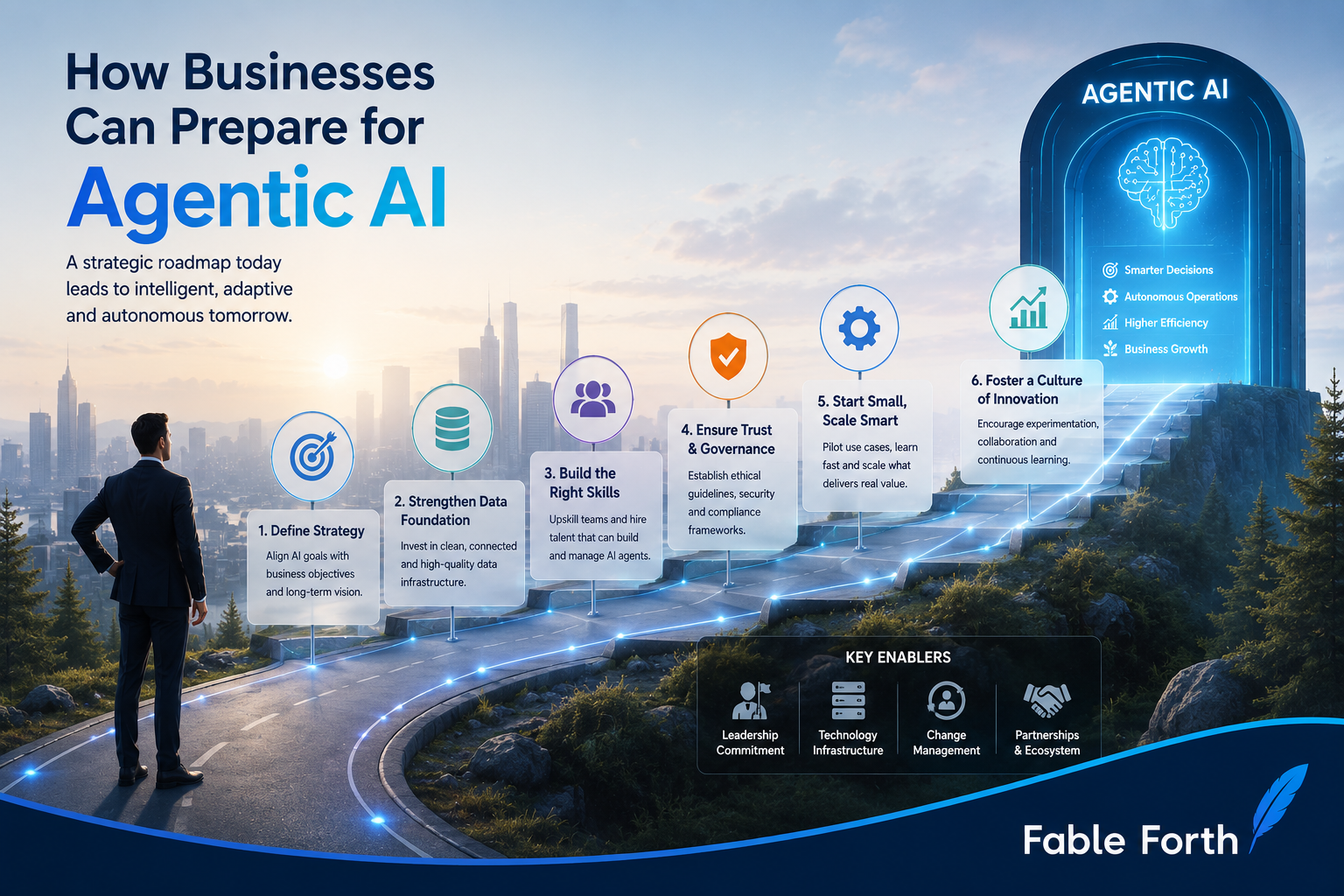
Any organization curious about going autonomous with AI ought to concentrate on readiness. Smart strategizing is almost always superior to hasty rollout.
Identify Repetitive Work
Begin by listing everyday tasks that consume a lot of employees’ time and effort.
These tasks could include sending out meeting invites, sorting documents, writing reports, addressing customer service FAQs, updating databases, or cataloging files. These are frequently the easiest to automate.
Improve Data Quality
Your AI depends on good data. Companies that have good data – properly managed, structured, and organized – will tend to have much better success with AI than those that have scattered and disorganized data. Data governance will naturally become a crucial piece of the AI puzzle.
Train Employees
AIAgents are transforming workplaces everywhere. Workforces must be educated on why agents make decisions and when human oversight is essential.
We also teach employees how to work hand-in-hand with smart systems to improve productivity, all while building trust and increasing workplace comfort with innovative technologies.
Maintain Human Oversight
Despite being able to carry out many functions with full autonomy, it is important that companies do not completely delegate their critical decisions to AI autonomy.
Why is human oversight in companies so important? The necessity of human involvement to meet legal and ethical compliance requirements, customer loyalty, or strategic decision-making is fundamental.
Ultimately, it is through the union of both elements that the companies that achieve the greatest successes do it, leveraging AI’s strengths with human experience.
Common Misconceptions About Agentic AI
Interest notwithstanding, the following common misapprehensions often emerge whenever autonomous AI comes up:
“Agentic AI Will Replace Every Job”
AI will make our jobs obsolete. One of the most popular myths surrounding AI is the impact it has on employment.
However, for the majority of companies and professional service firms, Agentic AI’s primary role is to take over mundane and time-consuming administrative and clerical tasks, freeing up humans to work on activities requiring a greater degree of expertise – tasks such as creativity, leadership, decision-making, negotiation, strategic thinking, and emotional intelligence.
“Only Large Companies Can Use It”
Advanced AI capabilities are more affordable than ever thanks to cloud computing. Startups and SMBs can experiment with autonomous AI without huge up-front costs for server hardware. Intelligent automation is no longer out of reach for any organization because affordable AI is now available.
“Agentic AI Never Makes Mistakes”
There are significant achievements already, but nothing is ever completely bug-free. Autonomous agents might misinterpret commands, use wrong information, or generate some unexpected results if left uncontrolled.
When deployed responsibly, a system would always have its tests, verification, and some degree of human inspection on an ongoing basis.
Why Agentic AI News Will Continue Growing
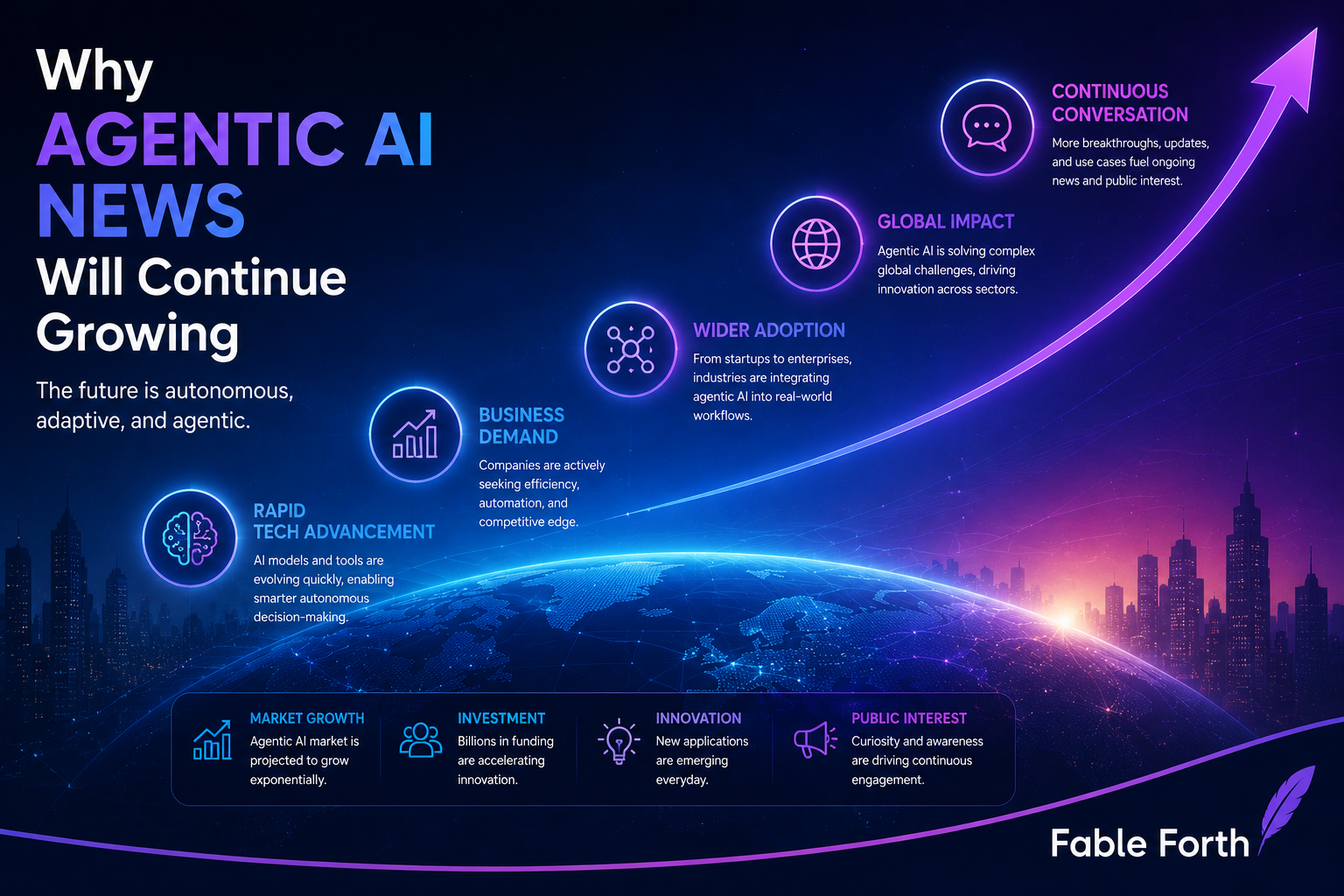
The growing popularity of agentic AI news reflects more than temporary excitement.
The favorable winds of growth are also powered by several long-running trends: Business operations are under relentless pressure to boost productivity and cut expenses.
Every business sector is still wrestling with the ongoing need for digital transformation. AI of a higher level is becoming far more readily available thanks to the availability of cloud infrastructure.
Work on reasoning, planning, and remembering continues to advance quickly.
Significant investments in technology are coming from governments, technology corporations, and private investors.
These trends combine to ensure that agent-based AI will undoubtedly be among the most discussed topics in technology for years to come. New goods, business rollouts, and scientific discoveries will fuel demand for accurate agent-based AI information.
Benefits and Challenges of Agentic AI
| Benefits | Challenges |
|---|---|
| Higher Productivity | Security Risks |
| Faster Decisions | Data Privacy |
| 24/7 Automation | Regulatory Compliance |
| Reduced Costs | AI Hallucinations |
| Better Customer Experience | Human Oversight Required |
| Workflow Automation | Ethical Concerns |
Frequently Asked Questions About Agentic AI News
What is Agentic AI?
An agentic AI is a type of AI capable of planning, reasoning, deciding, using software applications, and acting autonomously towards a multi-step goal with minimal human guidance.
Why is Agentic AI important?
This helps automate entire processes, rather than specific steps. Such software increases efficiency and lowers costs of operations and support. They also speed up business processes.
Which industries use Agentic AI?
Some of the biggest beneficiaries include health care, finance, software development, cyber security, manufacturing, retail and education, as well as customer service, logistics, marketing and enterprise operation processes.
Is Agentic AI replacing employees?
The vast majority of businesses will employ Agentic AI to augment workers in the completion of repetitive tasks, thus freeing human workers to be more creative, leaderlike, strategic, and involved in critical decision-making.
Is Agentic AI safe?
However, if you apply a human-centric and governance-led approach that relies on adequate security protocols and the inclusion of human control when operating such agent-based AI systems, it will be possible. Autonomous system outputs must continually be tracked, and critical decisions must still be reviewed and approved.
How is Agentic AI different from traditional AI?
Most Traditional AI acts to your prompts alone; Agentic AI thinks, reasons, and learns in the context of your task with the support of different tools to achieve the goal.
Can small businesses benefit from Agentic AI?
Yes. Most cloud-based AI solutions now include affordable automation tools for small businesses and startups to deliver better customer service, run their businesses, automate administrative tasks, and become more productive.
Final Thoughts
Perhaps the most profound technology revolution this decade is autonomous AI. This emerging trend, previously considered the realm of the futurists, is quickly migrating to the front lines of enterprise business and is rapidly changing how organizations manage processes, support staff, and provide service. So why has learning more about agentic AI become essential for far more than technologists?
In short, whether a business executive, entrepreneur, developer, venture capitalist, college student, or consumer, there’s something you’ll want to know about the role intelligent AI agents are playing in altering our world.
As reasoning agents grow smarter and get a memory, the potential to extend autonomous AI to nearly every industry is now possible. By beginning to learn about this burgeoning field now, organizations can best position themselves to thrive in the coming decade of the AI-powered enterprise.
It seems artificial intelligence’s future lies beyond mere conversations – into a paradigm where AI can reason its way toward objectives, coordinate with human beings, operate a host of tools and carry out productive work, increasingly on its own. That paradigm transition is precisely why agentic AI is the hot topic in tech right now.
